


Wajib vs Fardh: Who Has to Perform Qurbani/Udhiyah?
In the lead-up to Eid al-Adha, Muslims begin planning their Qurbani/Udhiyah while reflecting on whether it is required of them. Discussions around wajib and fardh are central to this, helping to clarify the nature of the obligation.
In Islamic teachings, fardh refers to obligations that are firmly established and universally agreed upon, such as the five daily prayers or fasting during Ramadan. These are duties that every eligible Muslim must fulfill.
Wajib, on the other hand, is also binding but is derived through slightly different scholarly reasoning. While still obligatory in practice, it carries a nuanced distinction in how it is classified within Islamic jurisprudence.
When it comes to Qurbani/Udhiyah, this distinction becomes especially relevant. According to the Hanafi school of thought, Qurbani/Udhiyah is considered wajib for Muslims who meet certain conditions. This means that it is required for those who have the financial means beyond their basic needs. Other schools of thought, however, classify Qurbani/Udhiyah as a highly emphasized Sunnah rather than an obligation. Despite this difference, all scholars agree on its immense importance and the strong encouragement to perform it.
Eligibility is not based on age alone, but on financial capacity. A Muslim who possesses wealth above their essential living expenses and meets the threshold similar to zakat eligibility is expected, in the Hanafi view, to offer a sacrifice. This applies to individuals rather than entire households, meaning that each eligible adult with sufficient means is responsible for their own Qurbani/Udhiyah.
The example of the Prophet Muhammad (saw) further emphasizes the importance of this act. He consistently performed Qurbani and encouraged others to do so, demonstrating that beyond legal classifications, it is a deeply valued practice in Islam.
Fulfilling Your Qurbani/Udhiyah with Muslim Hands Canada
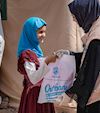
Muslim Hands Canada provides a dependable platform for carrying out Qurbani/Udhiyah while supporting vulnerable communities across the world. Our global reach and local partnerships allow for effective delivery, ensuring that the meat is shared in a way that preserves dignity and maximizes impact.
By choosing to fulfill Qurbani/Udhiyah through Muslim Hands Canada, donors are able to connect their understanding of obligation with real-world compassion. Whether one views Qurbani as wajib or a highly emphasized Sunnah, the opportunity to give remains the same. It is a chance to transform knowledge into action and to ensure that the spirit of Eid is felt by communities around the world.